On the market
View all →The honest comparison - cost, range, comfort, crew and the experience on board - for charter and for ownership.
Sailing yachts are usually 20–40% cheaper to charter than motor yachts of the same length, dramatically cheaper to fuel, and effectively unlimited in range under sail. Motor yachts offer more interior volume per metre, higher speed, and itineraries that never depend on wind. Which is right depends on what you want the week, or the ownership, to feel like.
Like for like, sail is the value play. A 30-metre performance sailing yacht typically charters from around €50,000–90,000 per week; a comparable motor yacht often starts at €80,000–130,000. The gap widens with the Advance Provisioning Allowance, because a motor yacht covering real distance can burn more fuel in a week than a sailing yacht uses in a season. We break the numbers down properly in what a charter actually costs.
The familiar rule of thumb, annual running costs of roughly 10% of the yacht’s value, holds for both. What differs is the composition. Motor yachts spend it on fuel and machinery; sailing yachts on rig, sails and deck hardware, on longer intervals. At equal length the sailing yacht is generally cheaper to buy, cheaper to run, and holds a quieter, more selective resale market where pedigree builders like Baltic, Royal Huisman, Vitters and Wally are rewarded. The full picture sits in our ownership guide.
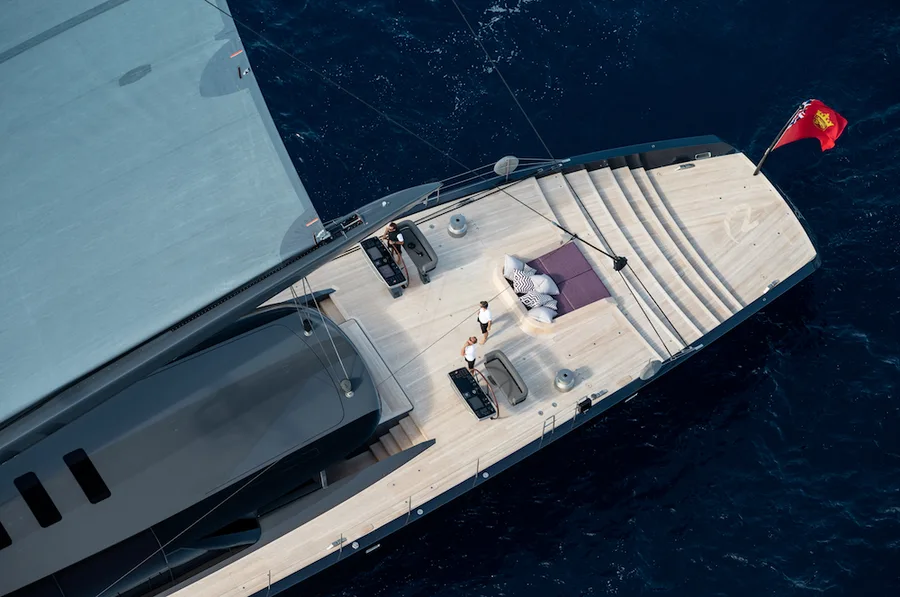
This is the motor yacht’s home ground. Without a rig and ballast to carry, a motor yacht of the same length offers substantially more interior volume, larger deck areas, and stability at anchor from zero-speed fins. If the brief is a floating villa for family weeks, the motor yacht argument is real.
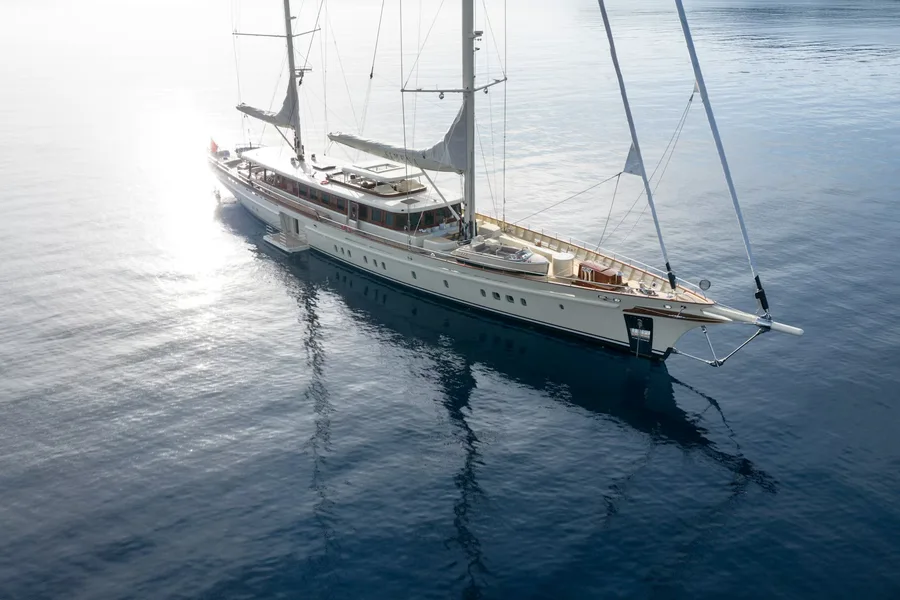
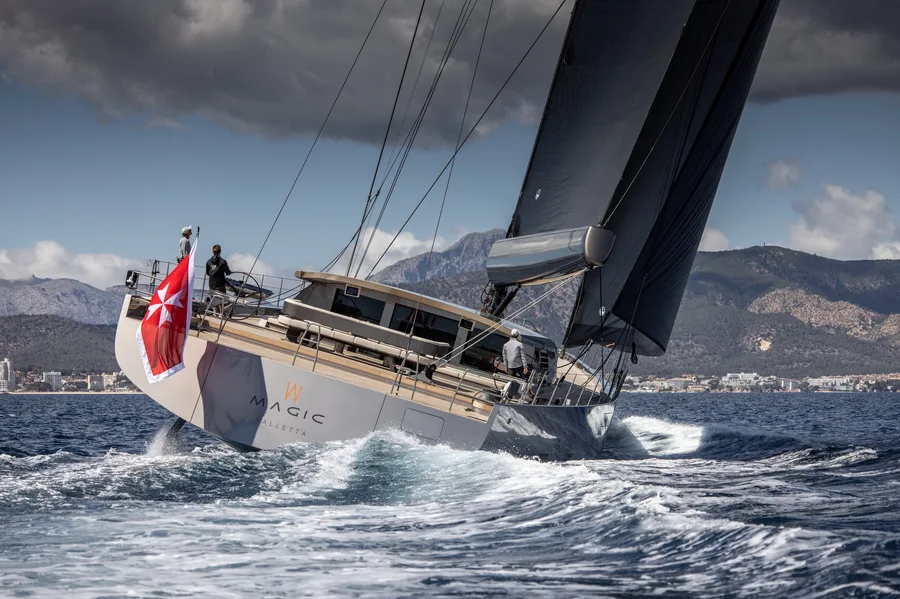
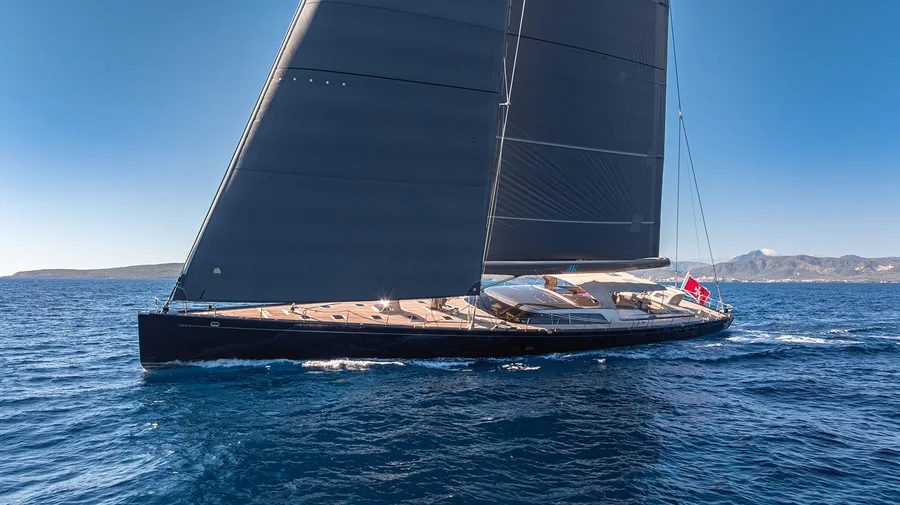
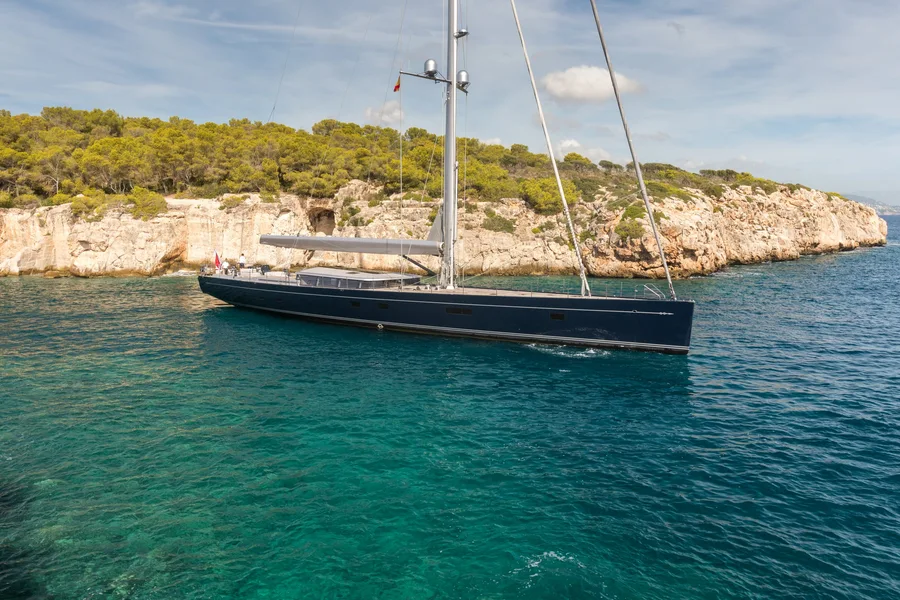
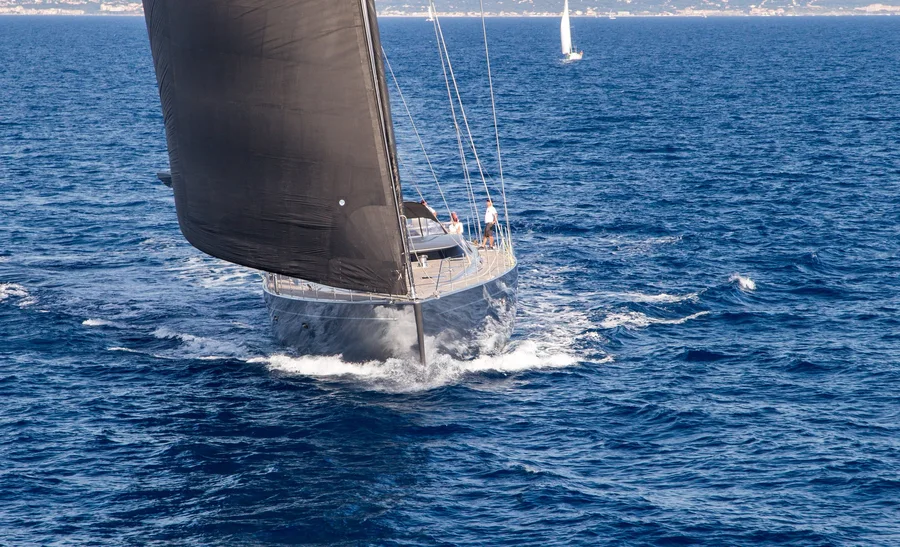
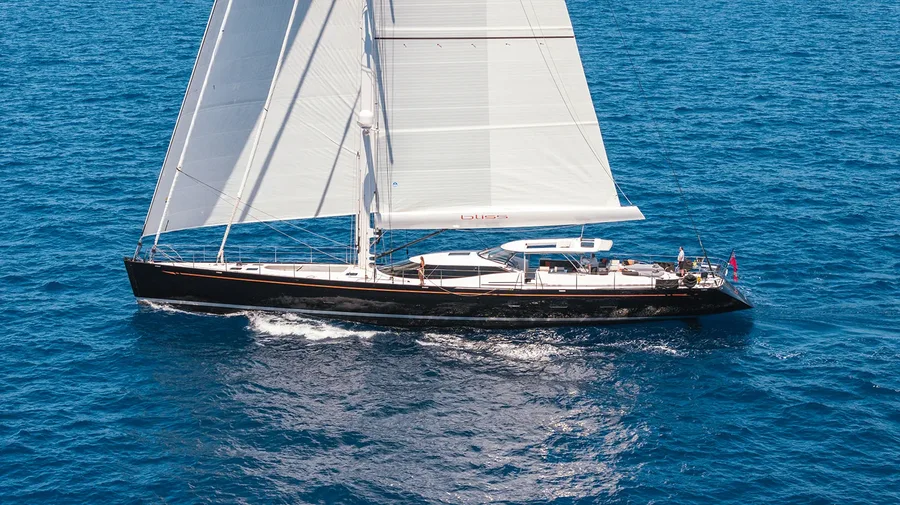
A sailing yacht under way is the reason people fall for the sea: silence, heel, the physics of 500 square meters of sail doing the work. Racing a superyacht regatta, or crossing between islands on wind alone, is an experience no engine room reproduces. Motor yachts trade that for pace and predictability, meaning more destinations per week and arrival times you can promise. If the sport is what draws you, the regatta dates are in the yachting calendar.
Under sail, range is effectively unlimited, which is why circumnavigations are overwhelmingly made under sail. Displacement motor yachts cross oceans on fuel planning; planing yachts rarely try. Within a Mediterranean or Caribbean week both cover the classic routes comfortably, and the sailing yacht simply does it on a fraction of the fuel. Season by season, the charter fleet shows where each one earns its keep.
Choose sail if the journey itself is the point: the sport, the silence, the seamanship, and the better economics at every length. Choose power if volume, speed and villa-grade comfort top the list and fuel is a rounding error. Chartering both, a season apart, is the honest way to find out which one you are. When you want to see the difference on paper, the yachts offered for sale make the comparison concrete.
Tell us which way you are leaning. We will come back with the honest answer for your brief, whether that is sail or power.
As a rule of thumb, annual running costs tend to be around ten percent of a yacht's value per year. A yacht worth five million euros will typically cost in the region of half a million euros a year to run, covering crew, berthing, insurance, maintenance and refit.
The main annual costs are crew (usually the largest on a crewed yacht), berthing and marina fees, insurance (roughly one percent of hull value), maintenance and periodic refit, and for sailing yachts, sails and rigging. Fuel, dockage and provisioning vary with use.
A sailing yacht can be more economical to run than a motor yacht of similar size, chiefly on fuel. However, it carries its own costs in sails and rigging, and often a similar crew requirement. The difference is smaller than many expect.
Yacht insurance is broadly in the region of one percent of hull value per year, varying with the cruising area, the age of the yacht and how it is used.
Size for size, sailing yachts are usually 20-40% cheaper to charter than motor yachts, and fuel consumption (part of the APA) is a fraction of a motor yacht's. A 30-metre sailing yacht typically charters from around EUR 50,000-90,000 per week; a comparable motor yacht often starts at EUR 80,000-130,000.
Annual running costs for both are commonly estimated at around 10% of the yacht's value, but the composition differs: motor yachts burn far more fuel, while sailing yachts carry rig and sail maintenance. Sailing yachts of comparable length are often cheaper to buy and to run.
A sailing yacht's range is effectively unlimited under sail, which is why circumnavigations are overwhelmingly done under sail. Displacement motor yachts can cross oceans but depend entirely on fuel capacity and burn.
Yes. Sailing yachts are Sailyachts' editorial home ground, but purchase and charter enquiries for motor yachts are arranged through the same network of brokers and operators. All enquiries are handled with discretion.